
Navigating Global Tensions and Technological Shifts
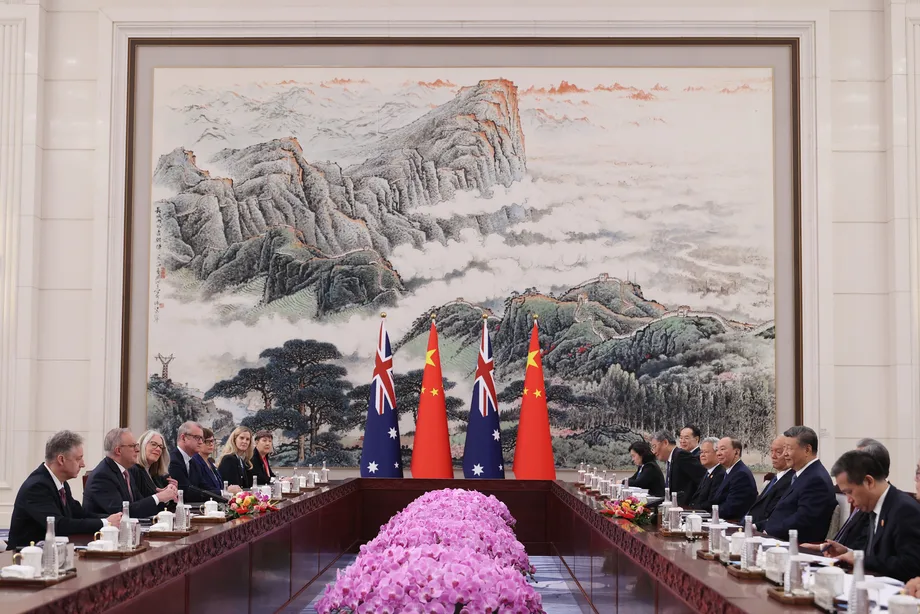
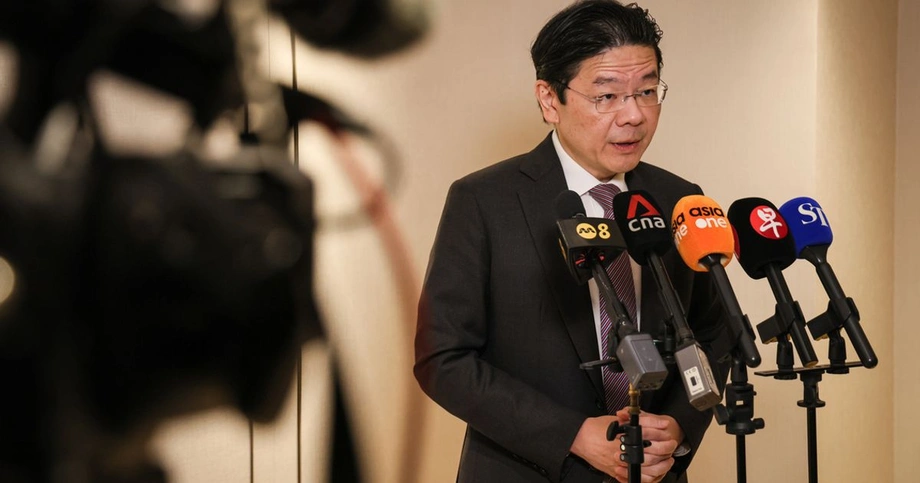
Prime Minister Lawrence Wong concluded a four-day working visit to China on November 21, 2026, setting out Singapore's vision to remain an open bridge in a world increasingly tested by major power competition. Speaking to Singapore media in Beijing after attending the 33rd Asia-Pacific Economic Cooperation Economic Leaders Meeting in Shenzhen, PM Wong emphasized that the Southeast Asian nation aims to use the best available technologies regardless of their origin. The visit included high-level meetings with Chinese President Xi Jinping in Shenzhen and Chinese Premier Li Qiang at the Diaoyutai State Guesthouse in Beijing, where both sides reaffirmed their commitment to bilateral cooperation amid global uncertainty.
সূচিপত্র
- Navigating Global Tensions and Technological Shifts
- Artificial Intelligence Governance and Bilateral Partnerships
- Addressing Transshipment Concerns and Chip Controls
- A Multipolar World and the Limits of Major Power Dominance
- Expanding Regional Connections and ASEAN Priorities
- Chronology of Key Events
- The Bottom Line
Geopolitical friction between the United States and China threatens to divide the global economy into separate technological ecosystems. While acknowledging that some bifurcation may be inevitable in sensitive, high-end fields, PM Wong expressed hope that other sectors will remain open to allow nations to freely choose technologies from the United States, China, and elsewhere. He pointed to autonomous vehicle testing as a practical example of this openness, noting that Chinese firms Pony.ai and WeRide are already running commercial trials in Singapore, while American autonomous vehicle company Waymo plans to launch commercial ride-hailing services in the country in 2028.
Artificial Intelligence Governance and Bilateral Partnerships
Artificial intelligence cooperation formed a central pillar of the discussions between Singapore and Chinese leaders. The Infocomm Media Development Authority and the China Academy of Information and Communications Technology have completed an exercise mapping their respective artificial intelligence governance frameworks, a step designed to help businesses operating in both markets avoid duplicating compliance efforts while deploying the technology safely. Singapore has also mapped its AI Verify Testing Framework against the United States National Institute of Standards and Technology AI Risk Management Framework.
PM Wong and Premier Li Qiang discussed expanding practical applications of artificial intelligence in areas such as healthcare and advanced manufacturing. Beyond technology, both nations welcomed the launch of negotiations to upgrade the China-Singapore Free Trade Agreement, focusing on the digital economy, government procurement, and cross-border data flows. These discussions build on existing government-to-government projects, such as the Sino-Singapore Tianjin Eco-City, which Singapore hopes to expand into the wider Beijing-Tianjin-Hebei region, including the Xiong'an New Area.
Addressing Transshipment Concerns and Chip Controls
Recent United States export controls on advanced semiconductor chips have designated Singapore, Malaysia, Indonesia, Thailand, and Brazil as higher-risk transshipment countries, requiring export licenses to prevent the circumvention of restrictions on China. Singapore-based cloud computing and data center firm Megaspeed has faced independent investigations by Singapore authorities regarding suspected fraud, while the United States monitors related chip movements.
Addressing these developments, PM Wong acknowledged that while most Chinese investments in Singapore are genuine and beneficial to the local economy, the potential abuse of Singapore's trusted status to bypass export controls is a real concern. Singapore lacks visibility and jurisdiction over how chips are used once they reach destination countries and cannot enforce foreign laws abroad. To address these concerns, Singapore and the United States are discussing an information-sharing mechanism to assist American enforcement efforts while ensuring Singapore secures the chips it needs for legitimate domestic purposes.
A Multipolar World and the Limits of Major Power Dominance
The trilateral meeting between the leaders of the United States, China, and Russia in Shenzhen prompted discussions around a potential Group of Three grouping. Commenting on these dynamics, PM Wong cautioned against viewing international affairs through the lens of a handful of dominant powers, noting that the world is too complex for two or three countries to dictate the fate of all nations.
PM Wong maintained an optimistic outlook on superpower relations, recalling his productive meetings with US President Donald Trump in Manila and Chinese President Xi Jinping in Shenzhen. He stated that so long as the two superpowers do not collide, space remains for smaller nations to navigate the international environment through commerce with all regions.
Expanding Regional Connections and ASEAN Priorities
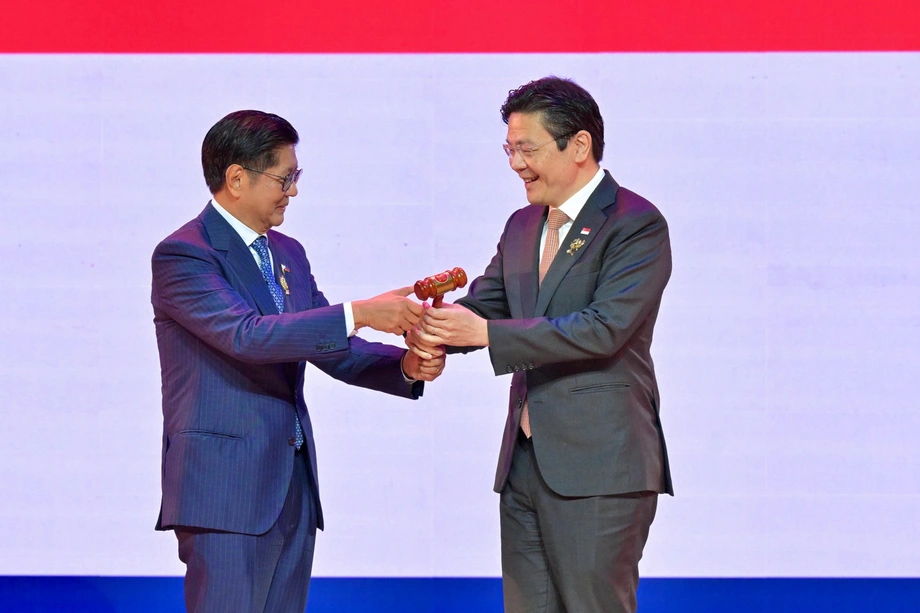
As Singapore prepares to assume the rotating chairmanship of the Association of Southeast Asian Nations next year, the country is working to strengthen the regional bloc as an independent economic center. Singapore is advancing discussions on potential free trade agreements and summits with the European Union and Canada, coinciding with the fiftieth anniversary of ASEAN-dialogue relations with the European Union. Partnerships with India and the Gulf Cooperation Council are also slated for expansion.
Regional connectivity projects continue to evolve through initiatives like the New International Land-Sea Trade Corridor, linking western China with Southeast Asia. Singapore and China are exploring ways to create synergies between this corridor and other infrastructure projects, such as the Pinglu Canal in the Guangxi region, to further reinforce trade links across the region.
Chronology of Key Events
- November 19, 2026: Trilateral meeting involving the leaders of the United States, China, and Russia takes place in Shenzhen.
- November 20, 2026: PM Lawrence Wong meets Chinese President Xi Jinping and Beijing Communist Party Secretary Yin Li in Shenzhen and Beijing.
- November 21, 2026: PM Wong holds bilateral talks with Chinese Premier Li Qiang in Beijing, concluding his four-day working visit.
- November 21, 2026: Singapore government factsheets are released covering new transport and green industry agreements.
The Bottom Line
- PM Lawrence Wong concluded a four-day working visit to China on November 21, 2026, after meeting top leaders including Xi Jinping and Li Qiang.
- Singapore and China launched negotiations to upgrade their free trade agreement, emphasizing the digital economy and cross-border data flows.
- Singapore is discussing a chip information-sharing mechanism with the United States to address transshipment concerns related to advanced semiconductor exports.
- Singapore will prioritize strengthening ASEAN and expanding trade ties with partners including the European Union, Canada, India, and the Gulf Cooperation Council during its upcoming ASEAN chairmanship.