
Unattended Electric Vehicles Caught on Camera Reversing Until Dawn
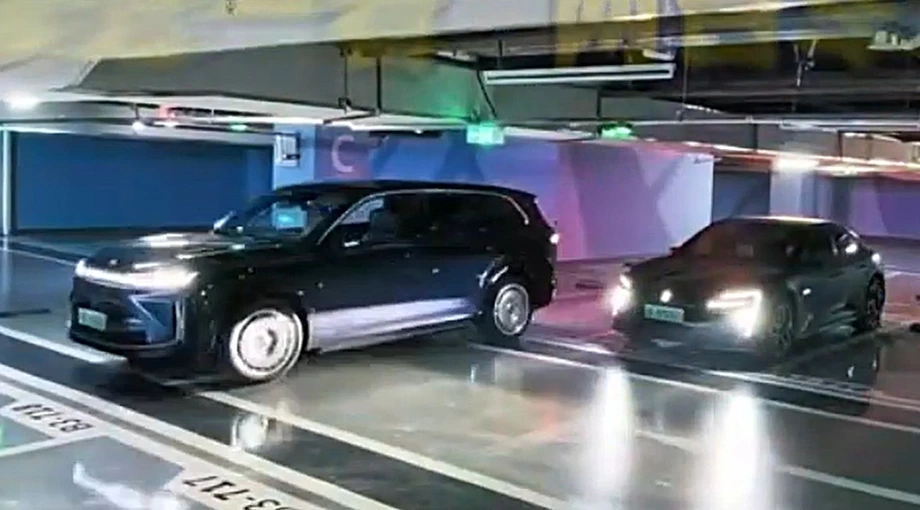
An electric vehicle in China spent an entire night attempting to park itself 868 times in a residential basement garage. Security camera footage circulating on Chinese social media showed driverless electric cars moving back and forth through underground parking facilities from midnight to dawn. The specific incident took place in Anhui province in early November, where a bewildered security guard watched an empty car repeatedly manoeuvre without any human occupant inside. The owner checked the vehicle's digital records the following morning and discovered that its automatic parking function had been activated 868 times before the car finally came to a rest beside another vehicle.
সূচিপত্র
- Unattended Electric Vehicles Caught on Camera Reversing Until Dawn
- The Connection to a Massive Huawei Driving Competition
- Three Theories Behind the Endless Parking Loops
- The Corporate Background and Advanced Technology Involved
- Timeline of Key Developments
- Regulatory Standards and Driver Responsibility
- At a Glance
Multiple similar videos surfaced online, capturing various car models performing repeated parking manoeuvres in empty bays. One unusual clip showed an Avatr 06 and an Avatr 12 performing synchronised parking routines side by side at around 6 am, following the exact same movements. Advanced automated parking systems differ from conventional sensors by allowing a vehicle to search for a space and park entirely on its own without requiring the driver to remain inside. The vehicle models involved in these midnight routines include the Avatr 06, Avatr 11, Avatr 12, and the Huajing S, all equipped with advanced intelligent driving technology.
The Connection to a Massive Huawei Driving Competition
The late-night parking mystery emerged during the second Huawei Qiankun Intelligent Driving Open, a 14-day competition held from October 31 to November 13, 2026. More than 190,000 car owners registered across eight categories to test their vehicles. The Parking Elite category ranked participants by their successful use of assisted-parking functions, including Automatic Parking Assist, Remote Parking Assist, Exit-and-Park Assist, and parking-lot navigation assistance. The top 100 participants in that category received points and prizes that included the HUAWEI Mate X7, Pura Collector's Edition, MatePad Mini, and FreeClip 2.
Participants in online communities described repeating parking manoeuvres to improve their leaderboard rankings, with one owner claiming to have completed 1,000 sessions in a single day. A participant result posted on November 1 listed 57,008 km of city assisted driving and 1,162 parking operations. However, competition rules stated that only qualifying activity between 6 am and 10 pm would be counted toward scores. The pre-dawn manoeuvres recorded in the viral clips fell outside those scoring hours, earning no additional points while consuming battery power during hours that overlap with low overnight electricity rates.
Three Theories Behind the Endless Parking Loops
Analysts and observers have identified three likely explanations for the repeated midnight movements. Owners may have used smartphone applications to move their vehicles out of spaces before initiating new parking runs, poor garage lighting or faded bay markings could have interrupted the manoeuvres, or a software fault may have triggered the endless loops. CCTV footage alone cannot establish whether a mechanical or digital fault occurred, meaning vehicle operating logs would be required to determine what triggered the longer sequences.
Technical documentation for the Avatr 06 Remote Parking Assist notes an operating speed of approximately 5 km/h, while its Exit-and-Park manual indicates the system can automatically shift into Park if an obstacle remains in the vehicle path. High connectivity levels may have caused onboard systems to process a heavy influx of activation commands continuously until the autonomous logic registered a valid completion. Similar incidents have occurred previously, such as a September 2025 event involving an unattended Xiaomi SU7 that moved by itself after a remote park command was triggered through an iPhone.
The Corporate Background and Advanced Technology Involved
The vehicles performing these automated manoeuvres rely on sophisticated sensor suites and software platforms. The Avatr 12, a luxury electric gran coupe measuring 5,020 mm in length and 1,999 mm in width, carries extensive sensor equipment distributed across its body, including LiDAR units, radars, ultrasonic sensors, and high-resolution cameras placed at the front, rear, and lateral positions. Changan owns 40.99 percent of Avatr, while battery giant CATL holds 14.1 percent, and Huawei supplies the underlying intelligent driving system.
Huawei supplies driving assistance technology to more than 20 brands across more than 2 million vehicles. Huawei executive Richard Yu noted that installation milestone on November 13. The company's ADS 3.2 software supports Park-to-Park driving in unfamiliar garages, while its Valet Parking Driver function allows owners to move vehicles remotely using a smartphone app. Huawei also demonstrated automated parking at airports and remote vehicle retrieval in various showcases. These developments build upon wider industry shifts, mirroring how China's automotive sector expanded rapidly, much like the broader electric vehicle framework established after policymakers prioritized rechargeable batteries and new energy vehicles decades ago.
Timeline of Key Developments
- October 31, 2026: The second Huawei Qiankun Intelligent Driving Open begins.
- November 1, 2026: A participant result logs 57,008 km of city assisted driving and 1,162 parking operations.
- Early November 2026: An electric vehicle in Anhui province attempts automatic parking 868 times overnight.
- November 13, 2026: Huawei's 14-day driving competition concludes, and executive Richard Yu announces the system is installed in more than 2 million vehicles.
- November 19, 2026: Media reports and video clips of ghost electric vehicles circulate widely on social media platforms.
Regulatory Standards and Driver Responsibility
Automated parking features remain driver assistance technologies rather than fully autonomous driving systems. China's Ministry of Public Security emphasises that intelligent driving systems do not replace human operators, and the legal responsibility for the vehicle remains with the person behind the wheel or supervising via application. Drivers must remain attentive and ready to intervene if an automated parking sequence encounters unexpected obstacles.
To govern these developing technologies, China implemented recommended national standard GB/T 47031-2026 on January 28, 2026. That standard establishes performance and testing requirements for automated parking systems. For Class II systems that cruise through parking facilities to locate empty spaces independently, the standard sets a strict maximum speed limit of 30 km/h to maintain safety in confined underground environments.
At a Glance
- An unattended electric car in Anhui province attempted automatic parking 868 times overnight in an underground garage.
- The unusual activity was captured by CCTV footage and discovered through the vehicle's digital logs the following morning.
- Videos emerged during Huawei's 14-day Qiankun Intelligent Driving Open, which ran from October 31 to November 13, 2026, with over 190,000 registered owners.
- The pre-dawn movements occurred outside the competition scoring hours of 6 am to 10 pm, earning no points for the participants.
- Potential causes include app-based user testing, poor lighting or faded bay markings interrupting sensors, or software looping faults.
- National standard GB/T 47031-2026 sets automated parking performance rules and a 30 km/h speed limit for Class II parking systems.